
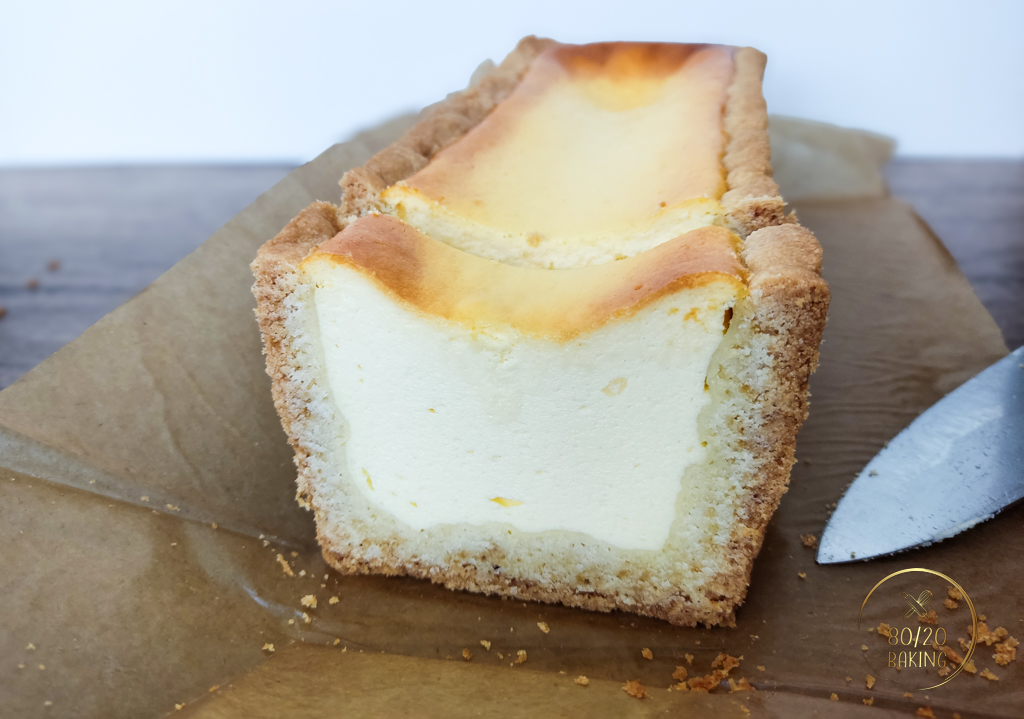
If you're looking for the ultimate German Quark Cheesecake (Loaf Pan Recipe), you've come to the right place. Rich, creamy, wonderfully smooth, and wrapped in a buttery sweet shortcrust pastry (Mürbeteig), this traditional-style cheesecake combines everything people love about authentic German baking. Instead of being baked in a round springform pan, this version is made in a loaf pan, giving it an elegant shape that's perfect for slicing and serving with coffee, as a weekend dessert, or as part of a festive dessert table.
Unlike American cheesecake, which relies heavily on cream cheese, authentic German Käsekuchen, or German quark cheesecake, is traditionally made with quark, giving it a lighter texture and a pleasantly fresh, slightly tangy flavor. This recipe combines low-fat quark (Magerquark) with creamy Greek yogurt, eggs, vanilla pudding powder, sugar, and heavy whipping cream to create a filling that is incredibly silky while still holding its shape beautifully after baking.
The result is a German quark cheesecake that's creamy without feeling heavy, rich without being overly sweet, and wrapped in a delicate buttery crust that perfectly complements every bite.
Whether you've grown up eating German cheesecake or you're discovering it for the first time, this German Quark Cheesecake (Loaf Pan Recipe) is guaranteed to become a favorite.
If you love Mürbeteig (sweet shortcut pastry), make sure you try out my Apricot Crumble Pie, or Cherry Crumble Pie.
There are countless cheesecake recipes, but this one stands out for several reasons.
First, instead of only having a pastry base, the sweet shortcrust pastry lines both the bottom and the sides of the loaf pan. This creates the perfect balance between crisp, buttery pastry and creamy filling in every slice.
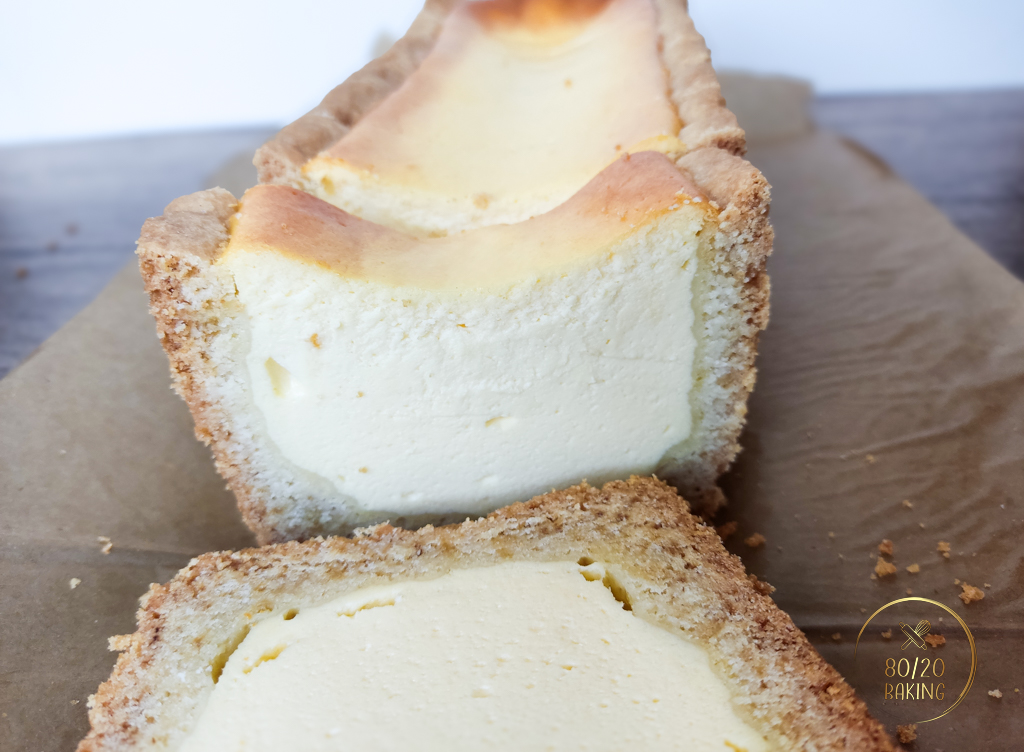
Second, the filling itself is exceptionally smooth. The combination of low-fat quark, Greek yogurt, whipping cream, eggs, and vanilla pudding powder creates a luxurious texture that is lighter than New York cheesecake while still feeling wonderfully indulgent.
Finally, baking this German quark cheesecake in a loaf pan gives it a unique presentation. The slices are tall, elegant, and easy to portion, making this recipe ideal for family gatherings, birthdays, afternoon coffee, or holiday celebrations.
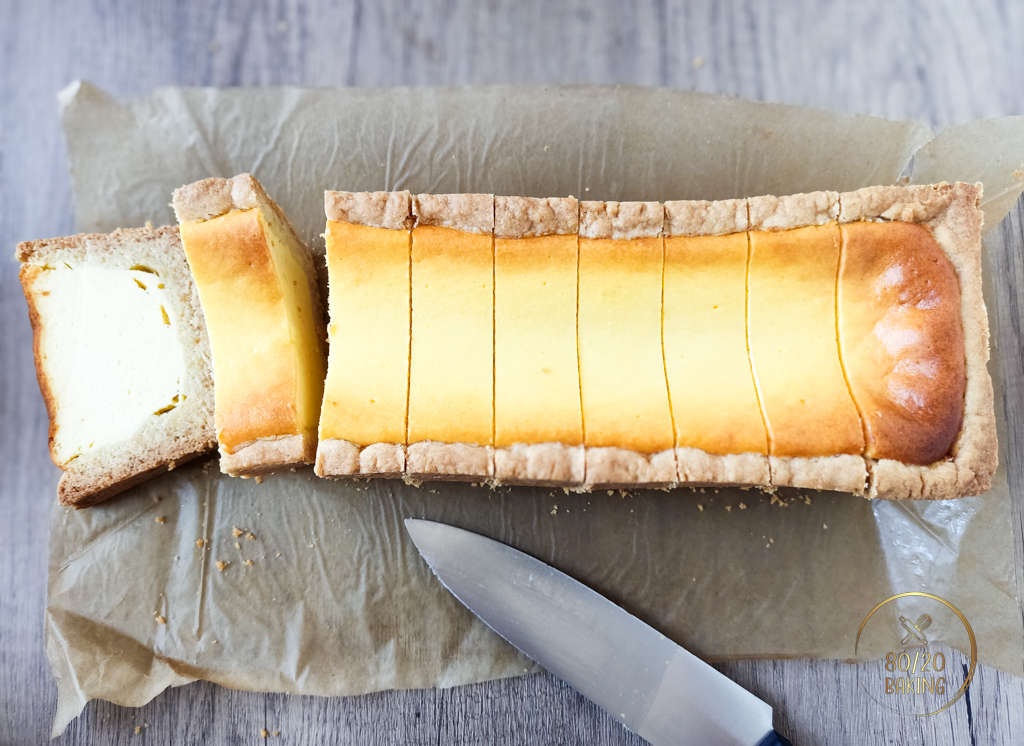
One of the key ingredients in traditional German quark cheesecake is quark, a fresh dairy product that sits somewhere between Greek yogurt and cream cheese.
If you've never baked with quark before, you're in for a treat.
Quark has a naturally fresh and slightly tangy taste while remaining much lighter than cream cheese. It creates cheesecakes that are creamy without becoming overly dense or rich.
For this recipe, low-fat quark (Magerquark) is used. Although it contains less fat, the addition of Greek yogurt and whipping cream creates the perfect balance of richness and lightness.
The finished cheesecake tastes fresh, creamy, and wonderfully delicate.
There are so many reasons to fall in love with this cheesecake.
This is one of those recipes that tastes even better after resting overnight.
Every ingredient has an important role in creating the perfect cheesecake.
The pastry is made with simple pantry staples:
The butter creates tenderness and rich flavor, while the flour provides structure. Sugar lightly sweetens the crust without overpowering the filling.
Fresh lemon zest brightens the pastry with subtle citrus notes, while vanilla sugar adds a classic aroma found in many European baked goods.
Together they create a pastry that is buttery, delicate, and slightly crisp after baking.
Quark is the heart of every traditional German cheesecake.
Its mild flavor allows the vanilla and lemon notes to shine while giving the filling its signature creamy texture.
Adding full-fat Greek yogurt makes the filling even creamier while adding just enough richness and tanginess.
It helps create a wonderfully smooth consistency that melts in your mouth.
Eggs bind the filling together and give the cheesecake its delicate structure.
They also contribute to the silky texture after baking.
Instead of flour or cornstarch alone, this recipe uses vanilla pudding powder.
This is a classic ingredient in many German quark cheesecake recipes because it stabilizes the filling while adding a subtle vanilla flavor.
The result is a cheesecake that slices beautifully without becoming dense.
Sugar sweetens the filling while balancing the natural tanginess of the dairy ingredients.
The amount is just enough to let the fresh flavors shine.
Instead of whipping the cream first, it is added in its liquid form.
This enriches the filling and creates a wonderfully creamy texture without adding unnecessary air.
One of the most important tips for making this cheesecake is not to overmix the filling.
After combining the ingredients, mix only briefly and on low speed.
High-speed mixing incorporates excess air into the batter.
Too much air can cause the cheesecake to puff up dramatically in the oven before collapsing during cooling, which often leads to cracks and an uneven texture.
Mixing gently keeps the filling silky, smooth, and stable.
Although this recipe is straightforward, a few simple tips will guarantee success every time.
Bake the cheesecake at 170°C (340°F) for approximately 70 minutes, or until the top is beautifully golden.
Every oven behaves slightly differently, so use the baking time as a guideline rather than an exact rule.
The cheesecake should look set around the edges while still having a very slight wobble in the center.
Perhaps the hardest part of making cheesecake is waiting.
This cheesecake must cool completely before slicing.
Cutting it while warm will result in a filling that is too soft and won't hold clean slices.
For the very best texture, prepare the cheesecake one day ahead.
An overnight rest allows the filling to firm up perfectly while the flavors continue to develop.
Many people actually prefer it on the second day because it tastes even creamier.
Since this recipe contains only a handful of ingredients, their quality really matters.
Fresh butter, good-quality vanilla sugar, fragrant lemon zest, fresh eggs, and creamy Greek yogurt all contribute to a noticeably better final result.
Absolutely.
In fact, it's recommended.
Making it one day in advance gives the cheesecake plenty of time to cool completely and allows the filling to set into its perfect creamy texture.
That's completely normal.
German quark cheesecake continues to set while cooling.
Once fully chilled, it will slice beautifully.
Overmixing incorporates air into the batter.
Air bubbles expand during baking, causing the cheesecake to rise excessively before sinking during cooling.
Gentle mixing keeps the texture smooth and helps prevent cracks.
A loaf pan creates tall, elegant slices that look beautiful on a serving plate.
It also offers a slightly different crust-to-filling ratio, giving every bite more buttery pastry.
German quark cheesecake is lighter than American cheesecake.
Instead of being very rich and dense, it has a fresh, creamy texture with a delicate tang from the quark and yogurt.
Combined with buttery pastry and subtle vanilla flavor, it's incredibly balanced and not overly sweet.
Yes.
Once completely cooled, wrap it well and freeze for up to several months.
Thaw it overnight in the refrigerator before serving.
The texture remains wonderfully creamy.
This German Quark Cheesecake (Loaf Pan Recipe) is delicious all on its own, but it's also wonderful served with fresh berries, raspberry sauce, cherry compote, strawberries, blueberries, or simply a light dusting of powdered sugar.
For an authentic German experience, enjoy a slice alongside a cup of coffee or tea during an afternoon coffee break, known in Germany as Kaffee und Kuchen.
Every component has been carefully chosen to create the perfect balance of flavor and texture.
The buttery sweet shortcrust pastry provides a delicate, crisp contrast to the silky filling.
Low-fat quark keeps the cheesecake light, while Greek yogurt and whipping cream add richness without making it heavy.
Vanilla pudding powder stabilizes the filling beautifully, allowing it to remain creamy while slicing cleanly.
The gentle mixing method keeps the batter smooth, and the slow bake at 170°C develops a lightly golden top without drying out the filling.
Finally, allowing the cheesecake to cool completely—and ideally rest overnight—transforms it into the creamy, bakery-style dessert it's meant to be.
If you're searching for the perfect German Quark Cheesecake (Loaf Pan Recipe), an authentic German Käsekuchen, or a delicious quark cheesecake with sweet shortcrust pastry, this recipe delivers everything you could want: buttery pastry, an incredibly creamy filling, simple ingredients, and a dessert that's every bit as beautiful as it is delicious. One slice is never enough, and it's the kind of recipe you'll find yourself baking again and again.
Preheat your oven to **170°C (340°F)**. Line a standard loaf pan with baking paper, leaving some overhang on the sides to make removing the cheesecake easier after baking.
Prepare the **sweet shortcrust pastry** by placing the cold butter, flour, sugar, egg, lemon zest, and vanilla sugar into a large mixing bowl. Knead everything together until a smooth dough forms. Try not to overwork the dough.
Press the dough evenly into the prepared loaf pan, covering both the bottom and the sides. Smooth the surface so the crust has an even thickness all around. Use a fork to prick the bottom of the pastry several times.
To make the filling, add the low-fat quark, eggs, vanilla pudding powder, sugar, full-fat Greek yogurt, and heavy whipping cream to a large bowl. Using a hand mixer on **low speed**, mix just until everything is smooth and combined. Avoid overmixing, as incorporating too much air can cause the cheesecake to crack or sink during cooling.
Pour the filling into the prepared pastry shell and gently smooth the top with a spatula.
Bake for **about 70 minutes**, or until the cheesecake is set and the top is lightly golden. The center may still have a slight wobble when you remove it from the oven.
Let the cheesecake cool completely in the loaf pan. For the best texture and clean slices, refrigerate it for several hours or, ideally, overnight before removing it from the pan.
Lift the cheesecake out using the overhanging baking paper, slice, and enjoy!